Average Reviews:

(More customer reviews)This is an excellent biography: Hazel Pierce does not speculate, she does not dramatize, she does not invent emotion or try to read her subject's mind and heart. She just tells the story of this magnificent woman's fascinating life.
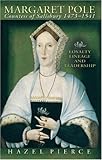
Link to Plantagenet England, friend and confidant of Catherine of Aragon, godmother and governess to Princess Mary, mother of Reginald Pole, future Archbishop of Canterbury, Margaret Pole was the richest woman in England, with lands and houses in her own name. From being favored by Henry VIII she fell to being imprisoned in the Tower of London, losing all her holdings; one son executed, another son exiled, she was unjustly condemned and horribly executed. She was not even legally tried, and was given an hour's notice of her death.
Winston Churchill summed up Henry VIII's reign with the sad commentary on the failure of the once great promise of the Renaissance prince, noting the executions of queens (Anne Boleyn and Catherine Howard), chancellors (Thomas More and Thomas Cromwell), a holy bishop (Fisher) and numerous monks and abbots (Richard Houghton and the Carthusians; Richard Whiting and the monks at Glastonbury), and 'almost every member of the nobility in whom royal blood ran'--Margaret Pole was one of those nobles. Hazel Pierce ensures that she is known for more than being one of Henry VIII's victims.
Click Here to see more reviews about: Margaret Pole, Countess of Salisbury 1473-1541: Loyalty, Lineage and Leadership
In this first biography of a significant female figure in the male-dominated world of British Tudor politics, Hazel Pierce reconsiders the life and martyrdom of Catholic duchess Margaret Pole against the changing social and political landscape of her times. Pole, niece of both Edward IV and Richard III, was the only woman apart from Anne Boleyn to hold a peerage in her own right during the sixteenth century, and this important contribution to medieval scholarship provides a matchless understanding of aristocratic women during that time period, as well as new interpretations of Henry VIII and his relationship with the nobility.


No comments:
Post a Comment