Showing posts with label eastern europe. Show all posts

3/14/2012

The Polish Underground Army, the Western Allies, and the Failure of Strategic Unity in World War II Review

The Polish Underground Army, the Western Allies, and the Failure of Strategic Unity in World War II
Average Reviews:

(More customer reviews)
The title of this book is a little misleading, as it discusses all aspects of Poland's involvement in WWII, and not only the Underground under German occupation.
Seldom-mentioned information is included. For instance, the hasty departure of the Polish government days after the German attack in 1939 has been misrepresented as some kind of cowardly or panicked flight that left the Polish forces to their fate. It was not. In fact, the surrender of Warsaw was ordered, from a remote location, by Marshal Smigly-Rydz. His personal emissary, Major Galinat, flew in to Warsaw from Romania with Smigly-Rydz's order to surrender. Warsaw could have fought longer, but Smigly-Rydz did not want any more loss of life and property. (pp. 20-21).
Aspects of Polish Underground activity discussed include early post-1939 resistance (e. g., Hubal), Operation Wachlarz ("Fan": Polish saboteurs working in the Soviet Union behind German lines), the foundation and operations of the AK (A. K., or Armia Krajowa), Operation Wildhorn (or Mosty "Bridges": the landing of light Allied aircraft in German-occupied Poland, the last of which involved the transfer of the captured V-2 rocket mechanism to England), attempts to negotiate with the Soviets and the unwarranted arrest of the 16 Polish Underground leaders by the Soviets, etc.
Facts and figures are provided on the meagerness of British airdrops of arms to Polish guerrillas. (pp. 120-121). Very few of even these airdrops had been accomplished by the Spring of 1943, the time of the Warsaw Ghetto Uprising. Jewish complaints about the "stinginess" of Polish armed support are clearly unwarranted.
Although several decades have now passed since the event, the wisdom or folly of the 1944 Polish Warsaw Uprising continues to generate heated discussion. Peszke has the following take on the matter: "As the old saying goes, victory has a thousand fathers but defeat is an orphan...For the Poles to refuse to fight would have been a terrible political and public relations defeat, one which would never be easily explained to one's own countrymen, let alone to one's allies. To sit passively while the miniscule but vociferous Communist groups liberated Warsaw and imposed their own authority was just not possible. Without direction, there was also every reason that the populace would go to the streets." (pp. 156-157).
Much of this book focuses on the geopolitical issues surrounding Poland's borders and the kind of Polish state that would emerge after WWII. The west's sellout of Poland at Teheran and Yalta began much earlier. While the author notes the Soviet geopolitical advantage caused by the USSR doing most of the fighting and the Red Army's possession of Poland, he did not seem to consider whether or not the conditional provision of Lend-Lease aid could have been used as a tool to enforce proper Soviet behavior towards Poland.
Early failures of the west to stand up to Stalin only emboldened him. Peszke comments: "As Stalin realized that his behavior did not elicit any rebukes or negative consequences but rather extravagant adulation, while the Poles who, opposing his policies, were condemned, Soviet policy became aggressive and brutally disdainful." (p. 71).
Opinion-forming outlets in the west tended to paint the Soviet Union as a benign socialist nation. The Polish government-in-exile was demonized as one consisting of privileged landowners, and Poland was increasingly portrayed as a nuisance in Soviet-western relations.
The British were not unilaterally indifferent to their Polish ally, but this did not matter. Peszke concludes: "It is beyond doubt that many Britons were in fact quite ashamed of their passive role. Lord Ismay wrote, `Nobody can deny that the failure to secure freedom and independence for Poland has brought shame on the western Democracies.' But shame only lasts a short time and, as the saying goes, people move on." (p. 7).
The book concludes with a profuse bibliography for further study or research.


Click Here to see more reviews about: The Polish Underground Army, the Western Allies, and the Failure of Strategic Unity in World War II

Poland was the first country to stand up to Germany in 1939, and maintained an underground army during the years of World War II. The underground army was organized in occupied Poland in October 1939 and worked until April 1945, hoping to establish a legitimate authority in post-war Poland while liberating territory with the aid of Polish Forces from the west. This military history covers the attempts of General Wladyslaw Sikorski and his successor (General Kazimierz Sosnkowski) to integrate the Polish forces into Western Strategy, and trying to have their clandestine forces (the Armia Krajowa) declared an allied combatant and legitimized by the Western powers before the eyes of both Germans and Soviets who sought Poland's destruction. The work opens with some general remarks on the inter-war period of 1919–1939, and then concentrates on the period of October 1939 through January 1945 and V-E Day. It covers such topics as Poland's part in the Norwegian and French Campaigns, the Battle of Britain, Polish Intelligence Services, Military Radio Network, Feluccas, the creation of the Polish Parachute Brigade, the German invasion of the Soviet Union, the Bomber Offensive, the Katyn graves, Polish air crews in RAF transport command, Tehran, Polish Wings in the 2nd Tactical Air Force, the Bardsea Plan, the invasion of Normandy, the Pierwsza Pancera, the Warsaw Uprising, Operation Freston, the disbanding of the Polish Home Army, and Yalta. A conclusion and several appendices (including a chronology, costs of the Polish forces based in the UK, list of Polish squadrons in UK, and the texts of Polish-British agreements) close the work.

Buy Now

Click here for more information about The Polish Underground Army, the Western Allies, and the Failure of Strategic Unity in World War II

3/07/2012

Poland's Threatening Other: The Image of the Jew from 1880 to the Present Review

Poland's Threatening Other: The Image of the Jew from 1880 to the Present
Average Reviews:

(More customer reviews)
With the partitions and the Nazi and Soviet occupations, no other European nation has suffered as Poland has, which makes it extremely difficult for Polish Catholics to admit to any malevolence of their own.
Polish monarchs welcomed Western Europe's Jews to Poland in the Middle Ages but this was not for altruistic reasons. The nobility desperately needed the Jews' acumen in finance and trade. Over the centuries, anti-Jewish sentiment grew in Poland, fueled by economic rivalry and the Polish Catholic Church.
At the end of the nineteenth century, a growing number of Poles envisioned an independent Poland whose citizens would be exclusively ethnic Polish and Catholic. This "Poland for Poles" ethno-nationalism, spearheaded by Roman Dmowski and his National Democratic Party, tapped into centuries-old, popular anti-Jewish sentiment. By the 1930's, anti-Semitism was not only prevalent among the masses, it was becoming increasingly institutionalized throughout independent Poland.
There were boycotts of Jewish businesses, restrictions on Jews attending university, segregation of Jews in classrooms, increasing Catholic-on-Jew violence, restrictions on Jewish religious practices passed into law, discussions of deportations, hiring and promotion restrictions in the public sector, etc.
Michlic ably examines the rise of institutionalized anti-Semitism in Poland in the 19th and 20th centuries. There can be no arguing with the extremely well-researched contents of her presentation. This book would be quite an education for Polish and Polish American conservatives, who deny anti-Semitism most zealously, and hold to it most dearly.
The editor of a Polish American weekly recently proclaimed that "Poles are not anti-Semitic" (Am-Pol Eagle, 4/8/2010), pointing to the thousands of Polish Catholics who participated in rescuing Jews during the Holocaust. The ignorance of this argument is beyond comprehension although it is widely disseminated throughout Polonia, even by academics who should know better. It's quite obvious that anyone who holds to this opinion has an extremely parochial understanding of Polish history, 1918-1945.
Polish chauvinists constantly point to the fact that Poland leads other former Nazi-occupied countries in the number of Righteous Among Nations awarded by Yad Vashem (6195 as of 6/12/10) without acknowledging that half of Europe's Jews lived in the country at the beginning of the Second World War. In reply to Poles who purposely misinterpret the number of Righteous by country for their own purposes, Yad Vashem states on its website, "The number of rescuers in the different countries depends on a multitude of factors and therefore does not necessarily indicate the attitude of the local population to the Jews and their murder. Moreover, in view of the great difference in circumstances between different countries and regions, one should proceed with great caution when making such comparisons."


Click Here to see more reviews about: Poland's Threatening Other: The Image of the Jew from 1880 to the Present

In this provocative and insightful book, Joanna Beata Michlic interrogates the myth of the Jew as Poland's foremost internal “threatening other,” harmful to Poland, its people, and to all aspects of its national life. This is the first attempt to chart new theoretical directions in the study of Polish-Jewish relations in the wake of the controversy over Jan Gross’s book Neighbors. Michlic analyzes the nature and impact of anti-Jewish prejudices on modern Polish society and culture, tracing the history of the concept of the Jew as the threatening other and its role in the formation and development of modern Polish national identity based on the matrix of exclusivist ethnic nationalism. In the late nineteenth century and throughout the greater part of the twentieth, exclusivist ethnic nationalism predominated over inclusive civic nationalism in Polish political culture and society. Only in the aftermath of the political transformation of 1989 has Polish civic nationalism gradually gained predominance. As civic nationalism has become more assertive, Polish scholars have begun to unearth and critically examine the legacies of Polish anti-Semitism and other anti-minority prejudices. Michlic conducted extensive research in Polish, British, and Israeli archives for this book. Poland’s Threatening Other contributes to modern Jewish and Polish history, the study of nationalism, and to a new school of critical inquiry into the nature of anti-Jewish prejudices. Download a list of textual corrections (PDF) here.

Buy Now

Click here for more information about Poland's Threatening Other: The Image of the Jew from 1880 to the Present

2/29/2012

Katyn and the Soviet Massacre of 1940: Truth, Justice and Memory (BASEES/Routledge Series on Russian and East European Studies) Review

Katyn and the Soviet Massacre of 1940: Truth, Justice and Memory (BASEES/Routledge Series on Russian and East European Studies)
Average Reviews:

(More customer reviews)
Sanford presents a wealth of information on the events leading up to and including the Katyn massacre and the decades-long coverup (in both Communist and western nations) of Soviet responsibility. Ironically, many past Soviet dissidents had acknowledged Soviet guilt for this crime (p. 213). Interestingly, evidence from Luftwaffe photos has recently become public that adds to the proof that the burials, and hence the massacre, must have predated the German invasion of the USSR (pp. 145-146).
Some 98.1% of the victims were ethnic Poles (p. 54). However, the "Poles" may include around 900 heavily-Polonized or secularized individuals of Jewish origin. Physical evidence recovered in the 1990s exhumations confirms the fact that a significant fraction of Polish victims fought back against their murderers (p. 108). Katyn was no emotional spur-of-the-moment murder. Instead, it resembled the acts of the Nazis: "The Soviet 1940 massacre, though, shares one fundamental feature with the trainloads of Jewish and Roma victims brought to be exterminated in Auschwitz and other death camps on industrial lines in batches according to a carefully thought out and scientifically organized method. The element of planned, impersonal and unemotional control predominated even though the chosen Soviet method of execution was about as direct and personal a relationship between executioner and victim as one could get." (p. 95). Sanford doesn't mention the fact that nearly 2 million of the 5-6 million murdered Jews also died through the "personal" means of being shot (by Einsatzgruppen, other German units, and their Ukrainian and Baltic collaborators).

Sanford quotes Neil Ascherson, who called Katyn "an act of selective genocide against a part of Poland's national elite, closely parallel to Hitler's order to exterminate the Polish intellectual class". (p. 83). Sanford himself concludes that: "It also suggests that the massacre was not aimed primarily to eliminate Poland's officer corps, so much as to weaken its general leadership elite." (p. 52). Finally, Louis FitzGibbon called Katyn: "The worst single unpunished crime in history." (p. vii).
Consider the progressive betrayal of Poland by the British and Americans, culminating at Teheran and Yalta. Unlike those who rationalize this event, Sanford acknowledges the fact that there was no danger of a Soviet-Nazi separate peace (p. 163), and that the Soviet puppet state was not a foregone conclusion given Red Army successes: "On the other hand, Western failure to tie Stalin down over the political future of Eastern Europe during his period of military weakness meant that Roosevelt had no cards left to play at the end-of-war conferences apart from a simple-minded banking on Stalin's goodwill." (p. 168)


Click Here to see more reviews about: Katyn and the Soviet Massacre of 1940: Truth, Justice and Memory (BASEES/Routledge Series on Russian and East European Studies)

The Soviet massacre of Polish prisoners of war at Katyn and in other camps in 1940 was one of the most notorious incidents of the Second World War. The truth about the massacres was long suppressed, both by the Soviet Union, and also by the United States and Britain who wished to hold together their wartime alliance with the Soviet Union. This informativebook examines the details of this often overlooked event, shedding light on what took place especially in relation to the massacres at locations other than Katyn itself. It discusses how the truth about the killings was hidden, how it gradually came to light and why the memory of the massacres has long affected Polish-Russian relations.

Buy Now

Click here for more information about Katyn and the Soviet Massacre of 1940: Truth, Justice and Memory (BASEES/Routledge Series on Russian and East European Studies)

2/12/2012

Bieganski: The Brute Polak Stereotype in Polish-Jewish Relations and American Popular Culture (Jews of Poland) Review

Bieganski: The Brute Polak Stereotype in Polish-Jewish Relations and American Popular Culture (Jews of Poland)
Average Reviews:

(More customer reviews)
Among other things, the Talmud records edited discussions between rabbinic scholars on legal and literary-interpretive topics. Two particular rabbi-scholars frequently appear in tandem, commenting and responding to each other's opinion. These two are named Rava, and Abbaye. One day in Talmud class my Talmud teacher, a devout Polish Jew, commented that "Rava and Abbaye go together like ham and eggs". I saw the jaw of one of my classmates literally drop, nearly hit the floor. "But Rabbi", he stuttered, "what do you know of ham and eggs?". My teacher replied "I never tasted them, but I've heard they go together well". So too Poles and Jews. They seem to go together. Poles and Jews. Jews and Poles. But this taste is bitter, complicated, with a lingering confused finish on the palate.
At least they used to go together. These days, Jews and Palestinians are edging their way into the spot traditionally reserved for Poles and Jews. Israel and the Zionist lobby are making sure of that. Where were Poles will be Palestinians. And some day, sadly, tragically, someone will have to write a book about Jewish-Palestinian relations, stereotypes, etc., and that writer will be called names, variously and such as "anti-Semite", "self hater", "Jew lover", "Zionist spy", "traitor", etc., names such as Danusha Goska will be called for writing "Bieganski".
In "Bieganski" Goska writes a serious book, treading on sacred, crushed bone-, ash- and gold teeth- filled ground, and our journey with her, not surprisingly, is frequently unpleasant. The sites she guides us to in the courageous "Bieganski" are illuminating, and shocking: amazing quotes from current newspaper articles, from the New York Times and Washington Post etc., quoting esteemed, mostly WASP American scholars and commentators saying the most outrageous, nasty things about Poles, Bohemians, Hungarians, 'Bohunks', describing them as brutish protohumans who can only be assumed of eating their own while smacking greasy bulging lips with stupid, sated Slavic simian smiles. Goska points us, with sniper-scope accuracy, to the systematic, disgusting, and pervasive anti-Polish bias in contemporary Hollywood film, literature, and popular major media outlets, television, and newspapers.
But the stuff we read in "Bieganski" is not esoteric; this racism is as mainstream as ham and eggs, as ordinary as Rava and Abbaye doing their intellectual joustings across the centuries of Talmudic discourse. Yet we can barely keep our breakfast down; we want to vomit up that ham, those eggs in disgust. Revulsion. How could we accept such trayf, such unkosher hatred?

And Jews, how do Jews feel about Poles? "Bieganski" incorporates unusual interviews Goska personally conducted with American Jews, speaking off-the-cuff about their stereotypes of Poles. Jews? Poles? We feel what we were taught, and what has been reinforced and encouraged by our WASP overlords and by our Jewish, anti-Polish dayschool teachers; Poles are subhuman, they are fed antisemitism in their mother's milk, we are superior to them. We go to visit modern Poland to see how poor and stupid and undeveloped the Poles are, and to see the Nazi death camps on Polish soil, and we know that the Poles are undeveloped and poor and stupid in cosmic punishment for the so-called "Polish Holocaust", which was a Nazi Holocaust conducted on occupied Polish soil, and which targeted Catholic Poles as much as it targeted Jews. But of course the Poles are to blame. And the mass murder of Poles, Polish Catholics, by Nazis from the west, and by Soviets from the East, is completely ignored, relegated to the ash heap of history, irrelevant, unworthy of mention.
So why will author Dr. Goska likely need to hire a bodyguard now? Why, for writing "Bieganski" will she be reviled, by Jews, by Poles, by African Americans? Why is it that no mainstream publisher would touch her book "Bieganski" for fear that they might lose support from generous financial backers? Why will Goska now be labelled, variously, as an "anti-Semite", a "Polish apologist", a "right-wing whacko", a "racist", a "self-hating Pole", a "Jew lover" and a "Zionist spy", all at the same time?
You'll just have to read the book and figure it out for yourself. It will be an exhilarating ride, eye-opening, jaw-dropping, intellectually rich and deep yet smooth as a Cuban cigar with a glass of dark, dark rum. "Bieganski". Mark my words. This one's a keeper. You'll be talking about it with your friends for years. "Bieganski". An exploration of the brute within.


Click Here to see more reviews about: Bieganski: The Brute Polak Stereotype in Polish-Jewish Relations and American Popular Culture (Jews of Poland)

In this controversial study, Goska exposes one stereotype of Poles and other Eastern Europeans. In the ''Bieganski'' stereotype, Poles exhibit the qualities of animals. They are strong, stupid, violent, fertile, anarchic, dirty, and especially hateful in a way that more evolved humans are not. Their special hatefulness is epitomized by their Polish anti-Semitism. Bieganski discovers this stereotype in the mainstream press, scholarship, film, in Jews' self-definition, and in responses to the Holocaust. Bieganski's twin is Shylock, the stereotype of the crafty, physically inadequate, moneyed Jew. The final chapters of the book are devoted to interviews with American Jews, which reveal that Bieganski and Shylock are both alive and well among those who have little knowledge of Poles or Poland.

Buy NowGet 35% OFF

Click here for more information about Bieganski: The Brute Polak Stereotype in Polish-Jewish Relations and American Popular Culture (Jews of Poland)

1/25/2012

Poland in World War II: An Illustrated Military History (Hippocrene Illustrated Histories) Review

Poland in World War II: An Illustrated Military History (Hippocrene Illustrated Histories)
Average Reviews:

(More customer reviews)
"Poland in World War II: An Illustrated Military History" by Andrew Hempel is a great overview of the Polish military effort in the second World War. This book is a concise outline, and not a lengthy volume, so it makes a great introduction to the topic. With more than 50 black-and-white photographs, the people and events described are brought to life.
As this book is concise and written in a straightforward manner, it makes great reading for young people or even postgraduates like me interested in the topic.

Click Here to see more reviews about: Poland in World War II: An Illustrated Military History (Hippocrene Illustrated Histories)

Poland's participation in World War II is generally little known in the West. This illustrated history presents the Polish military war effort, intermingled with factual human interest stories.

Buy Now

Click here for more information about Poland in World War II: An Illustrated Military History (Hippocrene Illustrated Histories)

1/15/2012

Sparks Amidst the Ashes: The Spiritual Legacy of Polish Jewry Review

Sparks Amidst the Ashes: The Spiritual Legacy of Polish Jewry
Average Reviews:

(More customer reviews)
Whether or not one agrees with everything he says, one can feel enlightened and uplifted by Sherwin's refreshingly-different and generally-balanced analysis of Polish Jewry and Polish-Jewish relations. He writes: "Indeed, the contemporary view of Poland as a land endemically inhospitable to Jews runs sharply counter to much of historical experience." (p. 55). And, it turns out, contrary to the claims of Jan Thomas Gross, far from all Poles attempted to erase all memories of Jews: "The Jews of Makow are gone...The cemetery was destroyed by the Nazis. The tombstones were used for construction. Remnants of these tombstones still pave parts of the road near the bus depot. After the war, the Poles of Makow salvaged what they could of the shattered tombstones and built a monument to the Jews of Makow." (p. 76).
Sherwin soundly repudiates the common notion that Poland is little more than a giant cemetery of Jews (p. 6). His travels throughout Poland uncover a surprisingly-large remnant of Jewish artifacts. Much of his book consists of detailed descriptions of the achievements in philosophy and religion of past Polish Jews, especially by the Hasidim. His entire work has a flavor of mysticism.
Rabbi Sherwin believes that most of American Jewry has turned to a lachrymose view of history (p. 87), forgetting this rich tradition and replacing it with poor substitutes: "The `myth' of death/rebirth, Holocaust/Israel tends to replace belief in God as the foundation of Jewish faith...Concerning American Jews, a number of Jewish scholars have observed that faith in Israel and in the Jewish people has replaced or superseded belief in God...The ideology of survivalism, coupled with the dual dogmatic pillars of Jewish civil religion of Holocaust-destruction and Israel-rebirth, folded nicely into an increasingly secularized Jewish self-identity." (pp. 85-86). Sherwin goes as far as suggesting that American Jewry is in danger of eventually self-destructing through the neglect of its heritage (p. 87, 90, 100).
Sherwin repeatedly stresses the reciprocity of Polish-Jewish prejudices, mentioning, for example, the Jewish belief that Christians are idol worshippers (p. 18). He also comments: "Perhaps the Jewish stereotype that Poles are anti-Semites was as problematic as the Polish stereotype that Jews are atheists and communists." (p. 32). But why do Polish anti-Semitism and Jewish Polonophobia persist? Sherwin believes that both Poles and Jews retain unexamined views of each other that have been handed down two or more generations from their ancestors, and usually without personally knowing anyone of the other group (pp. 129-130).
Sherwin freely acknowledges what many Poles had long suspected: "In the popular American and Israeli understanding of the Holocaust, the Poles all but replace the Germans as the perpetrators of the Holocaust, as the archenemies of the Jews throughout the thousand-year Jewish presence in Poland." (p. 84). He cites a visit to Auschwitz (p. 82) during which Israeli students were all but told that Poles were co-responsible with the Nazi Germans for the Holocaust, and suggests that this was being done not with the direct intention of denigrating Poles but for the forging of a post-Holocaust Jewish identity. (Even so, the outcome is identical.)
Sherwin criticizes what he considers the exaggerations of Polish aid to Jews during the Holocaust, but unfortunately makes no attempt to analyze the extent of this help. He also elaborates on the seemingly-paradoxical fact that prewar Polish anti-Semites often played a major role in the wartime rescue and hiding of Jews (p. 129).
Sherwin addresses the reality and limits of the Zydokomuna (Jewish Communism): "In this regard, it must be admitted that both for idealistic and self-serving reasons, proportionately more Jews than non-Jews were involved with the communist powers. But the popular Polish perception that Jews outnumbered non-Jews in the party or the state apparatus is patently false."(p. 136).
Sherwin recognizes the fact that contemporary Jewish attitudes may actually give rise to what may be called "secondary anti-Semitism": "However, to be sure, the pervasive Jewish stereotype of all Poles as anti-Semites may well encourage young Poles initially devoid of anti-Jewish sentiments to become anti-Semites." (p. 135). He also writes: "While the `competitive martyrology' of Jews and Poles results in nothing except the amplification of tensions, few Jews have acknowledged the devastating impact that the Nazi occupation had upon the non-Jewish population of Poland. (p. 133).
Sherwin includes various tidbits of little-known information, including the strongly philo-Semitic orientation of Kosciuszko (p. 143), and the fact that Hasidic dress is actually modified Polish clothing (p. 101). Rabbi Moses Isserles of Krakow once taught that philosophy originated with the Jews, and was only later copied by the Greeks (p. 37).
While not written for this purpose, some old rabbinical teachings discussed by Byron L. Sherwin find correspondence to Christian thinking. For example, the teachings of the Rabbi of Kotzk (Kock?) on the good works produced by genuine faith (p. 122) recount the Reformation teachings of good works as a fruit of genuine faith. Musar's warnings against an excessively mechanical obedience to the Law (p. 120), and that to the detriment of moral and ethical virtue, are reminiscent of the teachings of Jesus Christ against the Pharisees. And, contrary to the common view that the Jewish conception of God is one where He is less personal than in the Christian conception of God, Sherwin cites some Hasidic teachings (p. 114-115) that point to a very intimate human-God communion, even using such terms for God as "our little Father", "my darling", and God being not in heaven as much as "In our guts." A superb book!

Click Here to see more reviews about: Sparks Amidst the Ashes: The Spiritual Legacy of Polish Jewry

For hundreds of years, Poland served as the epicenter of Jewish life. As a result of the Holocaust, though, Poland has become a "Jewish Atlantis." Yet, the majority of Jews in the world today have their genealogical roots in the historical lands of Poland. In this book, Sherwin demonstrates how the unprecedented works of intellect and spirit produced during the Jewish "Golden Age" in Poland can provide contemporary Jews with the spiritual and intellectual resources required to ensure Jewish continuity in the present and future. Sherwin introduces us to the vast range of mystical speculation, evocative stories, talmudic dialectics, theological ideas, and social realities that were muted by the destruction of Polish Jewry during the Holocaust. Sherwin critiques the tendency among contemporary Jews to disregard the precious legacy bequeathed by Polish Jewry, and presents a plan for re-creating Jewish life after the Holocaust that draws from the wisdom of the spiritual magnates and from the communal experience that characterized Jewish life in Poland. Sherwin concludes with a controversial proposal for the future of Polish-Jewish relations.

Buy NowGet 32% OFF

Click here for more information about Sparks Amidst the Ashes: The Spiritual Legacy of Polish Jewry

12/29/2011

When Nationalism Began to Hate: Imagining Modern Politics in Nineteenth-Century Poland Review

When Nationalism Began to Hate: Imagining Modern Politics in Nineteenth-Century Poland
Average Reviews:

(More customer reviews)
"When Nationalism Began to Hate" is an excellent book. The title is a bit sensationalistic and a bit misleading.
WNBtH is a history of eighteenth century Polish nationalism. It is an attempt to answer the question: Why is it that decent Poles, and certainly decent Polish Catholics, in the 1880s, could not and did not publicly support an anti-Semitic brand of nationalism, and yet by the 1930s, this had changed -- Polish Nationalism and Polish Catholicism were both often openly anti-Semitic?
What happened?
Porter takes the reader on a journey through the tragedies of Polish history, and the uprisings that Poles mounted to resist German and Russian colonizers' attempts to eliminate Polish identity, and the theorizing that went on behind these uprisings.
Philo-Semitism was a marked feature of Polish Romantic nationalism, and Jews did participate in the struggle for Polish freedom. Many Poles saw Jews as an integral part of Poland. Mickiewicz created Jankiel, a Polish Jewish hero of the national epic, "Pan Tadeusz." Patriotic Jewish Poles were not just a feature of fiction; Jews like Michal Landy gave their lives in the nationalist struggle.
A feature of Mickiewicz's Romantic Nationalism was the concept of Poland as the "Christ of Nations," that would struggle for the uplift of all humanity. This wasn't just rhetoric -- Poles fought internationally. Poles like Haym Solomon, Tadeusz Kosciuszko, and Casimir Pulaski contributed to the American Revolution in this multi-national, Christian-inspired spirit.
Poland's many uprisings against Russian and German colonizers ended tragically, with the deaths and deportation of many, and even harsher attempts to stamp out Polish language and culture.
These tragedies changed Polish nationalists' views of time -- could time really result in progress? -- and what constituted a Pole. Could Lithuanians, Belorussians, Ukrainians, and Jews ever be part of a successful Polish nation state?
Peasants presented a particular problem. A popular argument stated that Polish uprisings failed because the peasants did not support them, and, in fact, had no reason to. Did it matter to them if they slaved for Poles, Austrians, or Russians? What did peasants care about Poland's literary heritage? They couldn't read. Some regarded peasants as inherently lesser creatures, perhaps inferior because of reincarnation.
Similar questions were asked about Jews and other ethnic minorities.
The answers that Poles, struggling with a highly multi-cultural, multi-faith population, came up with are fascinating, and speak to the mult-cultural, multi-faith world many of us live in today. One can hear echoes on nightly news discussions of how to address Spanish speaking, or Muslim, immigrants to the US.
Porter emphasizes that there is nothing inherently Polish, or Catholic, or Polish-Catholic, about anti-Semitism. Anti-Semitism was a development of one train of nationalist thought, a train of thought inspired by Social Darwinism and Scientific Racism.
Roman Dmowski, the proponent of this train of thought, wrote with brutality about forcing nationalism on peasants, whether they liked it or not, and forcing deportation on Poland's Jews. Dmowski stated, "Every Pole should be the enemy of every German he meets."
Dmowski had suffered under colonization, and he was a trained biologist. He was influenced by Social Darwinism, and saw life as a struggle for the survival of the fittest. He wanted Poles, as he understood Poles, to survive.
Dmowski rejected Poland's Romantic Nationalism, as embodied by Mickiewicz, and Mickiewicz's multicultural, philo-Semitic view of Poland. That approach -- the Romantic approach -- was worthlessly "spiritual" in Dmowski's view, and doomed to failure. Poles and Poland needed to enter the Darwinian struggle for life, and renounce any touchy-feely notions of solidarity with others who were not ethnic Poles.
Again, though this is a scholarly book, it is a fasciating read. Porter writes well. The questions the book engages are questions we are all contemplating in our increasingly globalized world.
I wish I could place "When Nationalism Began to Hate" on the required reading list of all of those who read a book that made a very big splash recently, Jan Tomasz Gross' "Neighbors."
Though I'm sure Gross did not intend this, "Neighbors," and the flood of media that accompanied its release, encouraged the stereotype of Poles as mindless, inherently anti-Semitic, brutes.
As WNBtH shows, multi-cultural societies present a series of challenges, and that is especially true when multi-cultural societies face the added stress of foreign occupation, colonization, and attempts at the elmination of the culture being colonized.
Polish thinkers developed varied ways of dealing with their oppression, and of responding to multi-culturalism. Their words, written a century ago, have resonance for us today.

Click Here to see more reviews about: When Nationalism Began to Hate: Imagining Modern Politics in Nineteenth-Century Poland

In When Nationalism Began to Hate, Brian Porter offers a challenging new explanation for the emergence of xenophobic, authoritarian nationalism in Europe. He begins by examining the common assumption that nationalist movements by nature draw lines of inclusion and exclusion around social groups, establishing authority and hierarchy among "one's own" and antagonism towards "others." Porter argues instead that the penetration of communal hatred and social discipline into the rhetoric of nationalism must be explained, not merely assumed.Porter focuses on nineteenth-century Poland, tracing the transformation of revolutionary patriotism into a violent anti-Semitic ideology. Instead of deterministically attributing this change to the "forces of modernization," Porter demonstrates that the language of hatred and discipline was central to the way "modernity" itself was perceived by fin-de-siecle intellectuals.The book is based on a wide variety of sources, including political speeches and posters, newspaper articles and editorials, underground brochures, published and unpublished memoirs, personal letters, and nineteenth-century books on history, sociology, and politics. It embeds nationalism within a much broader framework, showing how the concept of "the nation" played a role in liberal, conservative, socialist, and populist thought.When Nationalism Began to Hate is not only a detailed history of Polish nationalism but also an ambitious study of how the term "nation" functioned within the political imagination of "modernity." It will prove an important text for a wide range of students and researchers of European history and politics.

Buy NowGet 37% OFF

Click here for more information about When Nationalism Began to Hate: Imagining Modern Politics in Nineteenth-Century Poland

12/06/2011

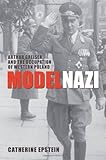
Model Nazi: Arthur Greiser and the Occupation of Western Poland (Oxford Studies in Modern European History) Review

Model Nazi: Arthur Greiser and the Occupation of Western Poland (Oxford Studies in Modern European History)
Average Reviews:

(More customer reviews)
This is an excellent study of Arthur Greiser who was the Nazi leader of the area of Poland around Gdansk- an area where he came to be really hated. 15000 people attended his hanging. Greiser spent his life trying to become a model Nazi. The author believes that this was partly because he was trying to make up for what the Nazis viewed as past errors- such as the fact that he had been a Free-Mason and was late to join the party. He became particularly zealous to overcome these 'deficiencies'. He proposed bizarre intiatives like killing people with Tuberculosis but Hitler refused to countenance this. Epstein stresses the prominent role he took in the Final Solution. This excellent and well-researched study is backed up by some interesting private correspondence which makes an already compelling story even more engaging as we see that in his letters home he could seem like a loving family man whilst at the same time acting as a total monster in the area of Poland he controlled. I would have no hesitation in recommending this book to anyone interested in the Second World War.
I really hope this book wins a prize- it deserves it.

Click Here to see more reviews about: Model Nazi: Arthur Greiser and the Occupation of Western Poland (Oxford Studies in Modern European History)

Model Nazi tells the story of Arthur Greiser, the man who initiated the Final Solution in Nazi-occupied Poland. Between 1939 and 1945, Greiser was the territorial leader of the Warthegau, an area of western Poland annexed to Nazi Germany. In an effort to make the Warthegau "German," Greiser introduced numerous cruel policies. He spearheaded an influx of hundreds of thousands of ethnic Germans. He segregated Germans from Poles, and introduced wide-ranging discriminatory measures against the Polish population. He refashioned the urban and natural landscape to make it "German." And even more chillingly, the first and longest standing ghetto, the largest forced labour program, and the first mass gassings of Jews in Nazi-occupied Europe were all initiated under Greiser's jurisdiction.Who was the man behind these dreadful policies? Catherine Epstein gives us a compelling biographical portrait of Greiser the man: his birth in the German-Polish borderlands, his rise to Nazi prominence in Danzig, his actions as party leader in the Warthegau, and his trial and execution in postwar Poland. Drawing on a remarkable array of German and Polish sources, she shows how nationalist obsessions, political jealousies, and personal insecurities shaped the policies of a man who held remarkable power in his Nazi fiefdom. Throughout, Epstein confronts a burning question of our age: why do individuals imagine genocide and ethnic cleansing to be solutions to political problems?

Buy NowGet 27% OFF

Click here for more information about Model Nazi: Arthur Greiser and the Occupation of Western Poland (Oxford Studies in Modern European History)

9/27/2011

Rethinking Poles and Jews: Troubled Past, Brighter Future Review

Rethinking Poles and Jews: Troubled Past, Brighter Future
Average Reviews:

(More customer reviews)
Given this book's title, there is surprisingly little "rethinking" and "brighter future," and surprisingly much "troubled past."
One essay stands out for its freshness and courage. Jewish-American journalist Carolyn Slutsky unabashedly exposes almost unbelievable hostility to Poles nurtured by March of the Living: youngsters were told not to "leave any good Jewish money in Poland" (190); marchers were encouraged to view Poles living near camps as participants in genocide, though those Poles witnessed Polish non-Jews' internment, torture, and murder. In MOL ideology, Poland has been the "evil country" Slutsky says (190). Participants who had positive experiences with Poles, or assessments of Poland, were steered away from those experiences by MOL leaders (192). After her MOL experience, Slutsky went on to live in Poland, and soon met Poles whose family members had been victimized by the Nazis. Ewa, a Polish girl, reported that her grandfather had been killed in Majdanek. Slutsky says her head spun - she finally realized the other side of the story (195). Slutsky ends with an exhortation that MOL try harder to find truth (195).
Mieczyslaw Biskupski carefully outlines the cinematic version of the Holocaust in theatrical films, documentaries, and television miniseries including "Schindler's List," "Holocaust," "Uprising," "Sophie's Choice," "Shoah," and "Shtetl," and compares that depiction with historical fact. Verdict? Poles are now the perpetrators of the Holocaust. In scene after scene, historical fact is distorted to divert guilt from German Nazis and place it on the shoulders of Poles, especially Polish, Catholic, peasants. Please note: all these films are shown in high schools and colleges as Holocaust educational material.
Robert Cherry demonstrates, through surveys, that Holocaust education teachers in the US tend to have anti-Polish biases.
Father John T. Pawlikowski is a Polish American priest and scholar who has been active in Polish-Jewish dialogue for decades. His essay offers a first-person account of his frontline experience, including at the United States Holocaust Memorial Museum. Pawlikowski is frank in recording obstacles he met from both Poles and Jews. Elie Wiesel was wary of him because of his ethnicity. At the same time, Poles demanded why he should represent Polonia (112). Polish Americans often complain about their depiction in scholarship, journalism, and media. Rightly so. But Polish Americans have not done the hard work to correct the stereotypical depictions of Poles, or to educate the public about Poland's history and culture, or even to begin to honor that history and culture (114). Poles must not blame Jews or anyone else, Father Pawlikowski insists; rather, they must look to Poles' own organizing, Poles' own support of scholarship and cultural products. Bravo, Father Pawlikowski.
Lawrence Baron offers an interesting account of how Roman Polanski's "The Pianist," based on the life of Holocaust survivor Wladyslaw Szpilman, and Andrzej Wajda's "Korczak," based on the heroic doctor and child advocate Janusz Korczak, were received in world media. Bottom line: politics and prejudice, rather than aesthetic merit, played a role in the acceptance or rejection of these works of art.
Michael Shudrich, Poland's chief rabbi, speaks as a very visible Jew in today's Poland. He talks about young people in Poland who discover, or begin to invest in, their previously hidden or ignored Jewish roots, and he salutes non-Jews who commit themselves to preserving Poland's Jewish heritage. Shudrich cites Pope John Paul II and his philo-semitism as having a positive impact on Polish-Jewish relations.
There are a few contributions that cling to past hates, and do not offer a road, as the book's subtitle suggests, to a "brighter future." Shana Penn says that print media do not misrepresent Poles (56). Her evidence of this? She used to preside over very tall file cabinets full of clippings (49). Penn is simply wrong in her assertion; print media certainly do misrepresent Poles and Poland. One need only mention the frequently repeated phrase "Polish concentration camps" and absence of mention of Polish suffering under the Nazis, for example in a 12/23/2009 NYT article about the theft of the Auschwitz sign that failed to mention that Poles were interned at Auschwitz, while being sure to list other victims.
Joanna Michlic continues to attribute anti-Semitism to Polish, Catholic, peasant, folk, pre-modern, and patriotic identities. She adduces no evidence to support this assertion. Much evidence could be adduced to call Michlic's conclusion into doubt: the Holocaust, the worst expression of anti-Semitism in history, was inspired and facilitated by modern, scientific, atheistic, Pagan, Western, advanced, ideology and persons. Many Catholic, peasant, folk, pre-modern and patriotic Poles rescued Jews. Michlic needs to jettison her prejudices and go back to actual data.
Eli Zborowski's foreword is very much a throwback to the past, and not part of any movement toward a "brighter future." In his brief piece, Zborowski emphasizes that his family was victimized by Nazis and by Poles. Zborowski's family was helped by Poles; that help is not his focus. Zborowski does not mention, and the book does not emphasize, that Poles suffered during the Holocaust, and that that suffering must be understood in any Polish-Jewish dialogue. Zborowski's victimizatioin is tragic and wrong and his story needs to be attended to and sympathy and restitution must be extended. At the same time, the central placement, in the foreward, of Zborowski's victimization at the hands of evil Poles during the Holocaust is very much not part of any steps toward a brighter future; it skews the entire text and undermines its stated purpose. Steps toward a "brighter future" for Poles and Jews will include mention of Polish suffering under the Nazis, and fearless probing of the complex shared history that preceded the 1939-45 era.

Click Here to see more reviews about: Rethinking Poles and Jews: Troubled Past, Brighter Future

Rethinking Poles and Jews focuses on the role of Holocaust-related material in perpetuating anti-Polish images and describes organizational efforts to combat them. Without minimizing contemporary Polish anti-Semitism, it also presents more positive material on contemporary Polish-American organizations and Jewish life in Poland.

Buy Now

Click here for more information about Rethinking Poles and Jews: Troubled Past, Brighter Future

9/17/2011

Contested Memories: Poles and Jews during the Holocaust and Its Aftermath Review

Contested Memories: Poles and Jews during the Holocaust and Its Aftermath
Average Reviews:

(More customer reviews)
This book mixes historical facts and stereotyped generalizations. Owing to space limitations, only a few of the latter can be reviewed. The prewar economic boycotts and numerus clausus at universities are mentioned, but not the fact that Polish Jews, at 10% of the Polish population, owned over 40% of Poland's wealth, and were over-represented at universities. These anti-Jewish policies were, using modern parlance, a form of affirmative action designed to get more Polish gentiles into Jewish-dominated institutions.
Although Poland was only one of two German-occupied nations in which the death penalty was imposed for aiding Jews, certain writers (cited by Zimmerman) have attempted to minimize its significance by disingenuously arguing that it didn't decisively constrain Polish behavior. But concealing an inanimate object (e. g., a gun) is far less risky than hiding a human being! We keep hearing that Poles did not "do enough" to save Jews. But who is to be the judge of this, and on what basis is the judgment to be made? As for Poles having failed a moral test, this additionally implies the uniqueness of Jewish suffering, a view that did not develop until long after WWII. How was the average Pole, trying to survive under the lash of the Germans, realize that his conduct would be subject to an ex post facto moralization? No convincing evidence is presented to support reflexive claims that Poles were disinclined to help Jews owing to prewar attitudes (and church teachings). In fact, the acknowledged anti-Semitic beliefs of many rescuers of Jews argue for the opposite.
Polish inaction towards the Jews is simplistically generalized as indifference. Polish help to Jews, Zegota aside, is characterized as "only individual and unorganized". Yet discussion of Zegota (Pawlikowski) makes it clear that the Germans would only have more easily penetrated a larger underground rescue network. Furthermore, substantially more Polish assistance to Jews would have triggered a correspondingly greater German terror against the Polish population with little net additional saving of Jewish lives. Complaints about the AK (Polish Home Army) lacking a systematic program for aiding fugitive Jews are misunderstandings. It was a clandestine guerrilla organization, devoted to military objectives and, exceptions aside, unable to save individual Jewish (or Polish) lives. Poles outside of the AK wanting to fight procured arms themselves, never waiting for outside assistance or "moral support" [for instance, the Peasant Battalions combating draconian German colonization, and rural Poles of Volhynia thwarting genocidal attacks by the UPA (so-called Ukrainian Insurgent Army)]. The AK did not become involved until later.
The usual inaction of Poles and occasional betrayal of Jews is portrayed as a violation that provoked a degree of Jewish pain and anger incapable of being assuaged by the actions of those Poles who did assist Jews. But could not the same be said about Polish reactions to earlier long-term comparable Jewish behaviors? Bearing in mind that loyalty is the expected conduct, the sacrifices of patriotic Polish Jews could not counterbalance the actions of a large fraction of Polish Jews who acted indifferently to Poland's centuries-long struggle for independence, and even supported Poland's enemies. While this book touches on the latter (Lwow 1918, disproportionate Jewish involvement in Communism 1939-1947) it fails to inform the reader about the significant pro-Russian orientation of Polish Jews going far back into the 19th century.
Recurrent charges of Poles turning in or killing fugitive Jews neglect a number of factors, one of which is the latter's significant involvement in the plunder (and sometimes murder) of Polish villagers. Contrary to Krakowski's claims, Jewish (and, for that matter, also gentile) banditry was very real, and subject to Polish counter-action.
The Jedwabne massacre is presented uncritically, along with the citation of some Polish authors who lament "the loss of Polish victimhood and innocence". But are Poland's centuries of tragic history so easily disposed of? And how many tens of Jedwabnes would be needed to rival the number of Jews killed by Horthy's Hungary or Petain's France? Pinchuk objects, on the basis of the fact that Jews were killed indiscriminately, to the notion of Jedwabne being Polish revenge for the recent Jewish-Soviet collaboration. But the Poles sent earlier to horrible slavery and death in Siberia, largely facilitated by Jewish denunciations, were hardly limited to those Poles guilty in Jewish eyes, and included numerous children. Finally, the evidence does not support Gross' storytelling. There were 200-400 Jewish victims, not 1,600. Very likely, the Germans orchestrated this atrocity, with the Poles relegated to a compelled subsidiary role (perhaps 40 Poles, certainly not "half the town"). Who actually torched the barn is unclear.
Perhaps the weakest part of this book is the rather superficial treatment of continued mutual Jewish-Polish prejudices (Gitelman), with no factoring of its extreme asymmetry. When a Pole makes negative comments about Jews, his audience is relatively small and almost always Polish. In contrast, a vast, diverse audience was exposed to the Polonophobic remarks of such prominent Jews as Carole Burnett, Alan Dershowitz, Yitzhak Shamir, Eppie Lederer (Ann Landers), etc. The Polack joke syndrome is mentioned, but not its origin from Jewish comedians. No mention is made of the usual anti-Polish slant of Holocaust-related films. (The Pianist is the exception that proves the rule. Free of Pole-bashing, it was widely criticized by Jewish commentators for this reason). The widely acclaimed educational cartoon Maus has pigs representing Poles, an inexcusable choice, while comparatively innocuous animals (cats, mice, etc.) represent all other nationalities. British scholar Norman Davies was denied tenure at Stanford University, as a result of Jewish pressure, all because of the opinion that he was "too pro-Polish".
The persistence of Polish anti-Semitism is simplistically attributed to the continued presence of negative characterizations of Jews in the Polish language, even though such characterizations, unfortunately, are virtually universal (e. g., the phrase "To Jew someone down" in the English language). Clearly, this book leaves much to be desired.

Click Here to see more reviews about: Contested Memories: Poles and Jews during the Holocaust and Its Aftermath

Few issues have divided Poles and Jews more deeply thanthe Nazi occupation of Poland during the Second World War and thesubsequent slaughter of almost ninety percent of Polish Jewry. ManyJewish historians have argued that, during the occupation, Poles atbest displayed indifference to the fate of the Jews and at worst werewilling accomplices of the Nazis. Many Polish scholars, however, denyany connection between the prewar culture of antisemitism and thewartime situation. They emphasized that Poles were also victims of theNazis and, for the most part, tried their best to protect the Jews.This collection of essays, representing three generations of Polish and Jewish scholars, is the first attempt since the fall of Communism to reassess the existing historiography of Polish-Jewish relations just before, during, and after the Second World War.In the spirit of detached scholarly inquiry, these essays fearlessly challenge commonly held views on both sides of the debates. The authors are committed to analyzing issues fairly and to reaching a mutual understanding.

Buy NowGet 16% OFF

Click here for more information about Contested Memories: Poles and Jews during the Holocaust and Its Aftermath